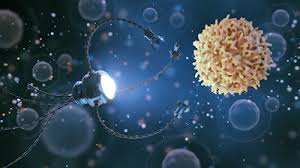
The prospective Nanomedicine’s bright but realistic future of nanomedicine towards enhance a drug’s efficiency as well as decrease its own poisoning is actually appealing for cancer cells scientists dealing with anti-cancer medicines that frequently have actually solid adverse effects.
Certainly, 65% of medical tests utilizing nanoparticles are actually concentrated on cancer cells. afa88bet link slot
The concept is actually that nanoparticle cancer cells medicines might imitate organic missiles that ruin growths while reducing damages towards healthy and balanced body organs. slot terbaik terpercaya
Since growths have actually leaking capillary, scientists think this will enable nanoparticles towards build up in growths.
On the other hand, since nanoparticles can easily distribute in the blood stream much a lot longer compared to conventional cancer cells therapies, they might build up much less in healthy and balanced body organs as well as decrease poisoning.
Although these style techniques have actually succeeded in computer mouse designs, very most nanoparticle cancer cells medicines have actually certainly not been actually revealed to become much a lot extra efficient compared to various other cancer cells medicines.
Additionally, while some nanoparticle-based medicines can easily decrease poisoning towards specific body organs, they might enhance poisoning in others.
For instance, while the nanoparticle-based Doxil reduces damages towards the center compared to various other chemotherapy choices, it can easily enhance the danger of establishing hand-foot disorder.
Based upon the searchings for of our laboratory examine, our team made a proposal that developing nanoparticles to become much a lot extra particular towards their meant aim at might enhance their translation coming from pet designs towards individuals.
This consists of producing nanoparticles that deal with the drawbacks of a specific medication – like typical adverse effects – as well as house in on the kinds of tissues they ought to be actually targeting in each specific cancer cells kind.
Utilizing these requirements, our team developed a nanoparticle-based immunotherapy for metastatic bust cancer cells.
